Many kinds of neurons
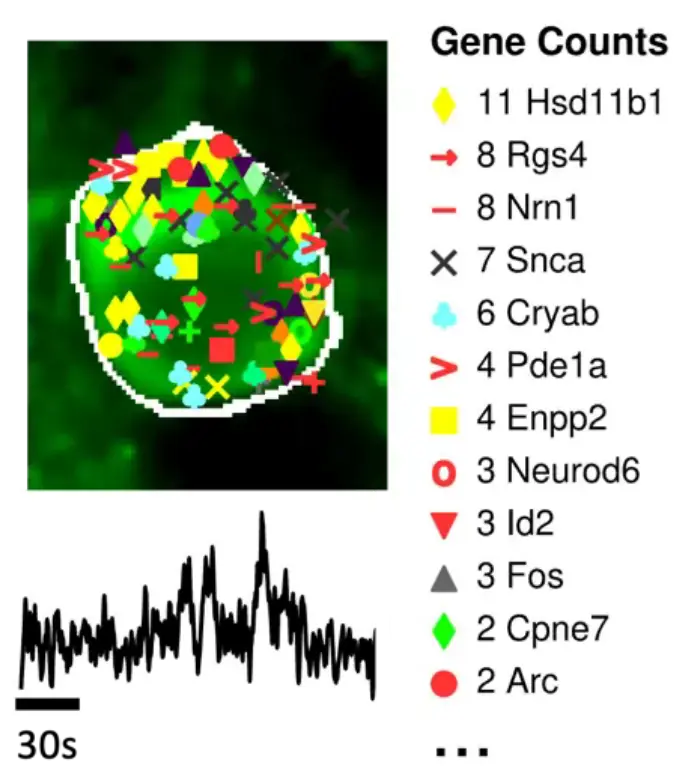
The brain contains many types of neurons, but what do all of these different types of neurons do? One way to figure out the type of a neuron is by looking at the genes that are active in it. I study how the active genes in a neuron relate to how the neuron processes information. I combine recordings of living neurons with information about the active genes, allowing me to determine how these genes relate to the neuron’s activity. The banner image at the top of this site is one example - the neurons are shown in green, and the genes are shown in colours.
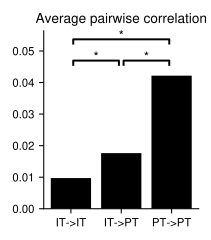
These measurements let us ask whether different types of neurons behave differently. In one study, we identified the types of thousands of recorded neurons and found that two broad groups of neurons differed in how closely they coordinated their activity. We can also ask other questions, such as how neuron types respond when an animal becomes alert, and what features of the visual world neuron types respond to. By linking genes to activity in individual neurons, I hope to understand why the brain needs to have so many different types of neurons, and how we might be able to use this knowledge to develop drugs and therapies.
Genes and activity in one neuron
Different types behave differently
Related papers
- 2026
-
2026
Mapping the visual cortex with Zebra noise and wavelets Journal of Vision
- 2022